
Denim & Casual Alterations in Carmichael
Perfect Fit for Your Everyday Wardrobe
Routine denim and casual work for Carmichael runs the full bench scope — original-hem preservation that keeps the factory leg-opening visible, taper geometry for athletic and non-standard leg shapes, waist resets where the off-rack sizing fails, crotch-seam reconstruction on long-cycle jeans worth keeping in rotation, knee patches in either invisible or visible-style, and the small structural repairs (rivet replacement, belt-loop refit, pocket-corner reinforcement) that extend wearable life on a piece the household is not ready to retire. The intake rhythm here mostly threads through the Watt Avenue retail loop — a Saturday Loehmann's Plaza or Country Club Plaza purchase dropped at the studio on the same shopping circuit, completed inside the working week, picked up on the next Watt Avenue errand. No appointment needed for routine work; bring the piece during walk-in hours and the footwear you actually pair with it — the hem set against the real shoe lands correctly on fitted-cut denim where a guessed height does not.
Updated
What this service looks like in Carmichael
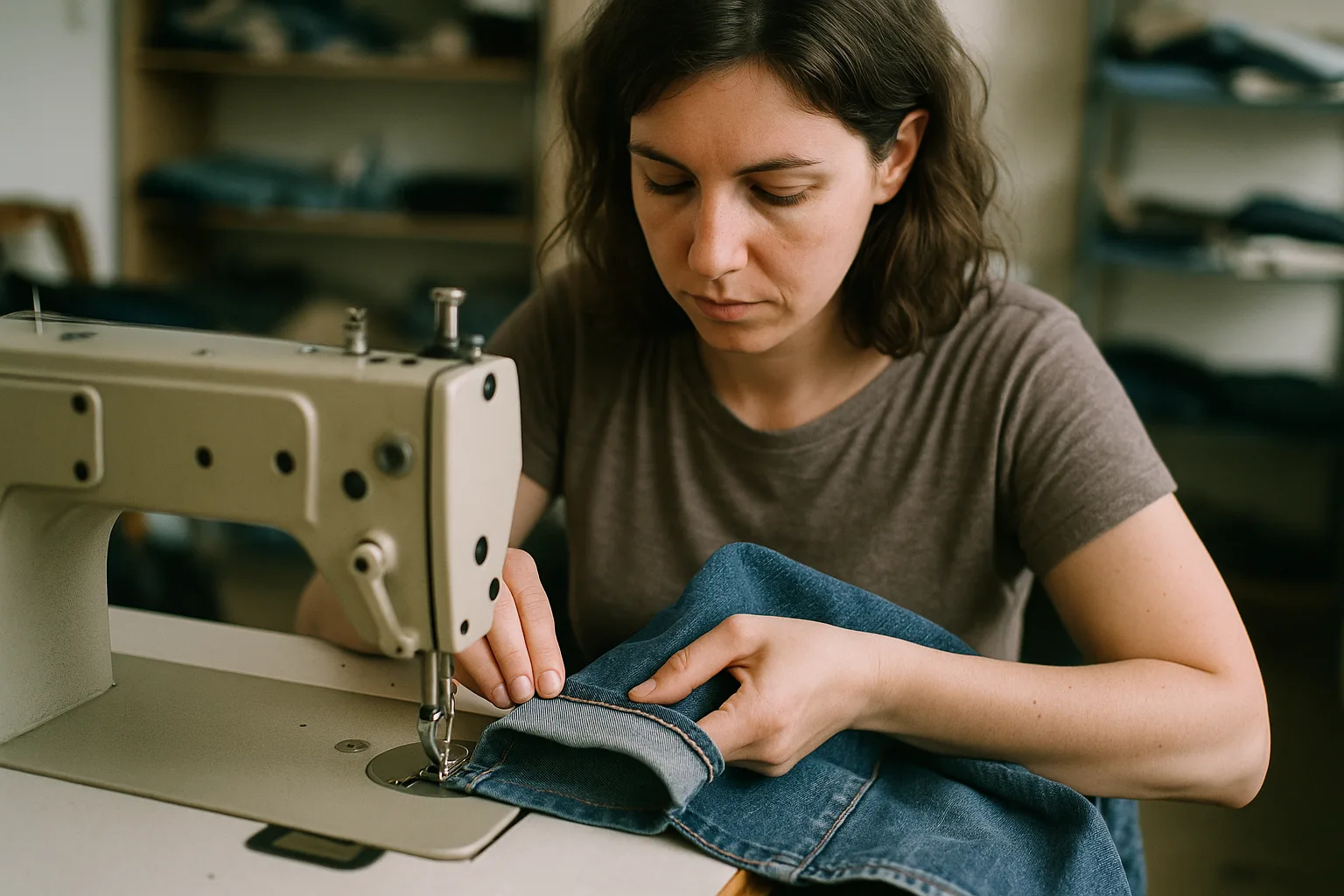
A Carmichael denim intake reads differently from the school-event-driven volume the inland cities generate because the local pattern threads tightly into the Watt Avenue retail loop and the long-tenure household maintenance habit rather than peaking around dance or graduation calendars. The single largest intake stream comes off the Country Club Plaza and Loehmann's Plaza retail corridor on Watt Avenue — a Saturday afternoon spent shopping the plaza, two or three pieces of new denim acquired, then dropped at the studio bench eight minutes north on Fair Oaks Boulevard on the same trip. The most-requested specialty technique on these intakes is original-hem preservation: the inseam shortens internally above the factory hem rather than folding the existing hem under, which preserves the original leg-opening finish on the mid-tier and premium denim the Watt Avenue corridor tends to carry. The visible result is a hem that reads as the manufacturer's original at typical viewing distance, which matters more on the price tier Carmichael shoppers reach than a counter operation's standard fold-hem would suggest. A second intake stream feeds from the boutique-and-specialty retailers along Fair Oaks Boulevard and inside Town & Country Village — premium denim brands sold at lower volume per store, often with the kind of brand-specific construction details (selvedge edges, contrast stitching at the inseam, specialty rivets at the back pocket) that benefit from a bench that handles each brand on its own terms rather than running every intake through a generic counter workflow.
A third stream comes off the American River Parkway recreational-wear pattern that runs alongside the equestrian and outdoor lifestyle in Carmichael: trail-pant hemming after a Manzanita Avenue boutique purchase, taper work on lighter-weight technical denim that holds up to weekend Sailor Bar or Carmichael Bluffs use, the periodic reinforcement on cuff and seat panels for pieces that see hard wear. The fourth stream — quieter but persistent across years — runs through the settled-household denim maintenance cycle: a Cooley Heights or Del Dayo household with a favored pair of jeans cycling through periodic taper refinements, hem adjustments as shoe choices shift, and the occasional structural repair that keeps a long-fit pair in service rather than replaced. We honestly tell clients up front that for a single hem on a single pair of trousers from a Marconi Avenue purchase, the closer counter operation along that corridor is reasonable and probably faster — the bench earns its place when the work needs the original-hem technique, the athletic-taper geometry, the structural-repair scope, or the file-on-record memory of prior fit decisions on the same household's denim wardrobe.
How It Works
Bring Your Denim
Walk in with your jeans, casual pants, or jackets. Wear the shoes you'll pair them with for accurate hemming.
Expert Fitting & Pinning
We'll assess the garment, discuss the look you want, pin for precision, and provide a clear quote on the spot.
Pick Up & Wear
Your perfectly altered denim is ready — original details preserved, fit transformed.
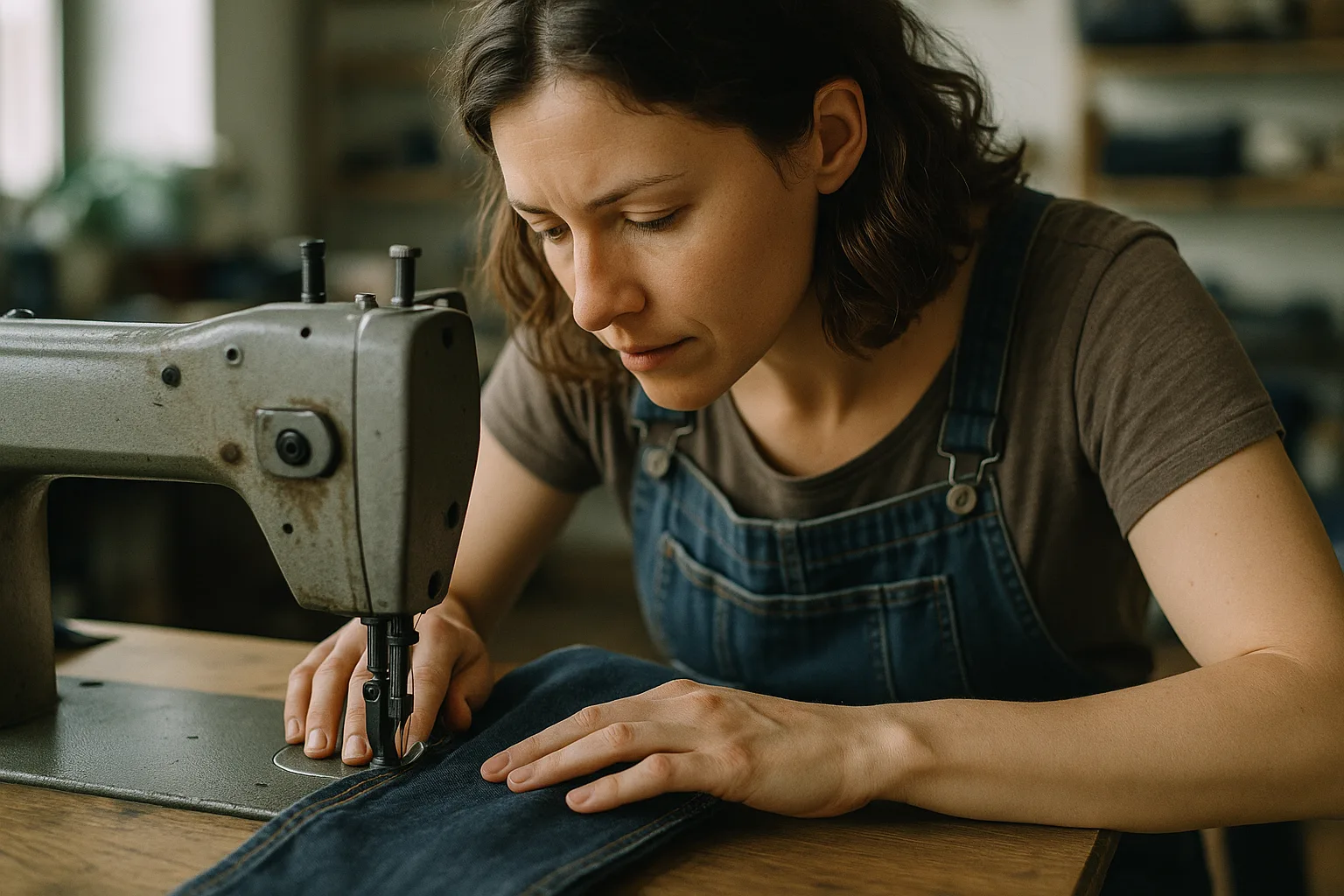
Routine denim and casual intake happens during walk-in hours without an appointment booking — that is the workflow most Watt Avenue retail-loop visits use. Two things make the pin run cleanly: the piece itself in the condition it will be worn (clean if it has been pre-washed or sized down post-purchase, untouched if straight from the shop), and the reference footwear the household actually pairs with the piece. Hem pins against an estimated heel height read wrong against the real shoe four times out of five on fitted-cut denim. Original-hem preservation feasibility gets confirmed on the specific garment at intake — most modern factory hems support the technique cleanly but heavily-distressed or pre-frayed cuffs sometimes require the fold-hem close, and we will confirm that path before committing. Routine alteration delivers in four-to-five business days; original-hem preservation adds a business day depending on bench load and the inseam complexity. Pickup at the studio bench is standard; for households who would rather not return for the pickup, text-coordinated handoff at a Watt Avenue meeting point during a return shopping loop is available on a case-by-case basis.
Starting Prices
Prices vary based on garment type and complexity. Contact us for a precise quote.
Jeans & Denim
| Service | Starting price |
|---|---|
| Hem (Original Hem Preserved) | $30 and up |
| Hem (Standard) | $25 and up |
| Taper Legs | $45 and up |
| Waist In / Out | $55 and up |
| Zipper Replacement | $35 and up |
Casual Wear
| Service | Starting price |
|---|---|
| Pants Hem | $25 and up |
| Jacket Sleeve Shortening | $45 and up |
| Shirt / Blouse Taper | $35 and up |
| Hoodie / Sweatshirt Hem | $35 and up |
Why Carmichael chooses us
Original Hem Experts
We preserve the factory distressed edge on your jeans — the alteration is virtually invisible.
All Denim Weights
From lightweight stretch jeans to heavyweight selvedge — we have the right equipment for every fabric.
Fast Turnaround
Most denim alterations are done within 3–5 days. Rush options available for 48-hour delivery.
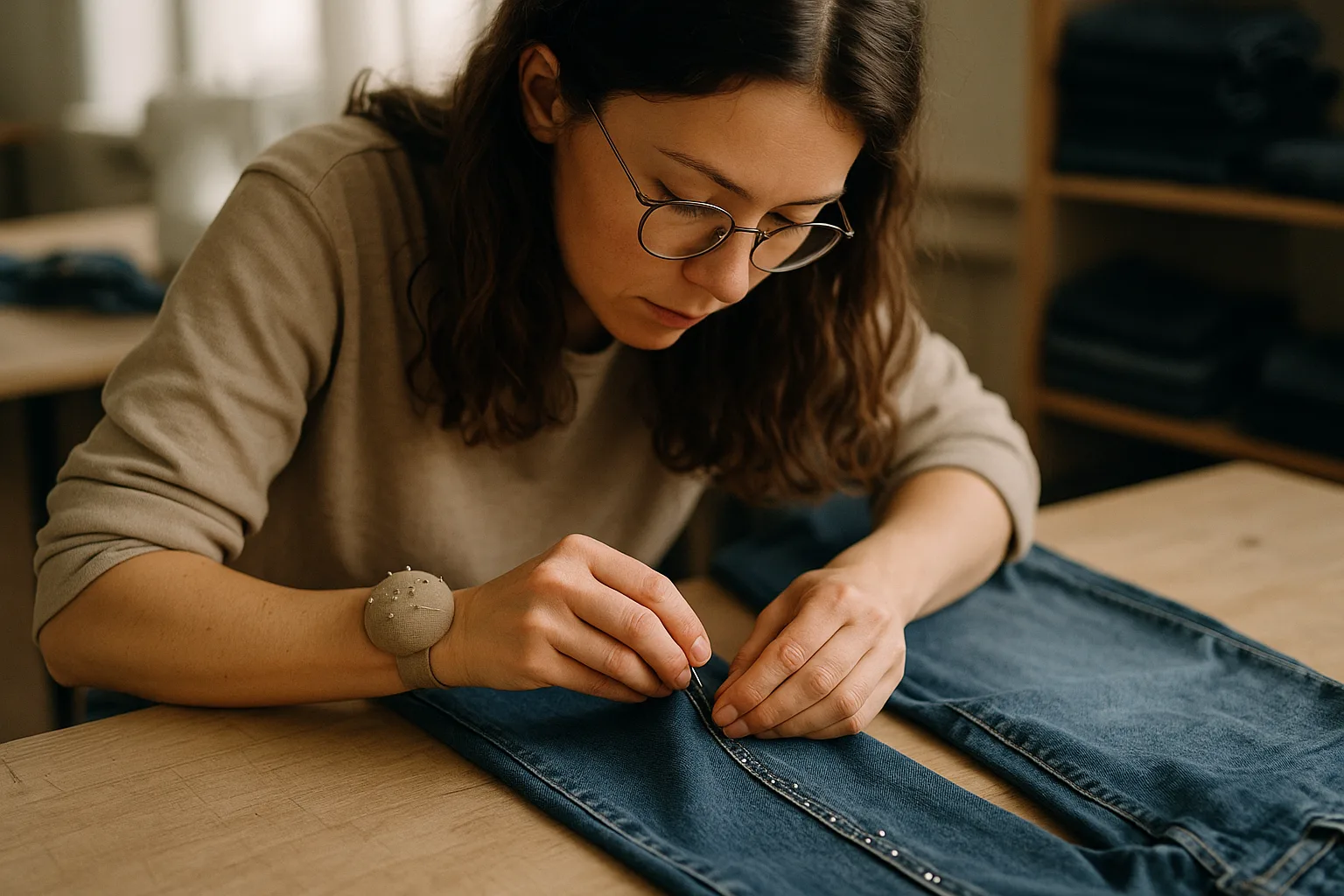
The honest comparison against Watt Avenue counter alternatives breaks down across three dimensions where the studio bench reliably differentiates. First, original-hem preservation is the technique that separates a competent hem from one that preserves the value of the piece on anything above mid-tier denim — and the technique requires opening the inseam internally rather than folding the existing hem under, which is the part most counter workflows do not commit to because the time-per-piece runs longer than the counter pricing model supports. Country Club Plaza premium denim is the cleanest candidate population; Town & Country Village specialty-shop denim follows close behind. The visible difference at the leg opening at typical viewing distance is what most Carmichael clients return for once they have seen both results side by side.
Second, the taper geometry scope handles the off-rack-fit problem at the source rather than working around it: athletic-build cuts where the thigh runs wide and the calf reads narrow, non-standard knee-to-ankle ratios that retail brands rarely cut for, and the geometric adjustments that match the actual leg shape rather than the rough average the brand designed around. The fitting bench pins each axis (thigh, knee, ankle) against the real leg rather than against a generic taper line, and the result reads as a custom fit rather than an alteration. Third, the structural repair scope — crotch reconstruction, knee patches in invisible or visible-style, pocket reinforcement, hem-fray refinishing on heavily-worn long-cycle pieces — keeps a favorite pair of jeans in rotation rather than replaced, and for the long-tenure Carmichael household with a denim wardrobe built across years, that scope matters more than the per-trip convenience of a closer counter. The file-on-record holds the prior taper line, hem-break preference, and waist-set choice forward across years; the second and third alteration on familiar cuts moves through the queue without re-pinning the established geometry.
Frequently Asked Questions
Other alteration services in Carmichael
Leather Alterations in Carmichael
From $75 — Specialized equipment; 12+ yrs on luxury materials.
48-Hour Hem in Carmichael
From $35 — Drop off by 4pm, ready in 48 hrs — guaranteed.
Custom Tailoring in Carmichael
From $200 — Suits, shirts, dresses built to your measurements.
Bundle Alterations in Carmichael
From $180 — Bring 3+ garments and save 10–20% on the total.
Bridal Alterations in Carmichael
From $75 — Bustle, hem, bodice; 2–3 fittings; book 6–8 wks out.
Mobile Tailoring in Carmichael
From $35 — We come to you; same studio quality, no drop-off.
Alterations in Carmichael
From $25 — Hemming, taking in, resizing — 3–5 day turnaround.
Denim & Casual Alterations in Carmichael
Denim Alterations That Respect the Jeans You Already Love
A pair of jeans you actually reach for is a strange thing to replace. The fade has settled where you sit and bend, the waistband has given exactly enough, and the fabric has stopped fighting you. So when the length is wrong, or the seat sags, or the leg runs wider than you want, the answer usually isn't a new pair. It's getting the pair you own to fit the way it should have from the start. That's the bulk of what comes across the table at our studio: denim and casual wear that's close, but not right, and a customer who'd rather fix than start over. Denim is its own kind of work. It's heavier than dress fabric, the seams are bulky where they cross, and the thread and topstitching are part of the look. A hem on a wool trouser and a hem on a pair of jeans are not the same job, and treating them the same is how you end up with a thin, flat finish that announces it was shortened. Most of what we do with casual wear is about keeping the alteration invisible while the garment ends up fitting like it was cut for you.
Keeping the Original Factory Hem
The first thing people ask about is length, and the first thing they worry about is losing that worn, slightly frayed edge at the bottom of the leg. Good instinct. A standard hem chops that off and replaces it with a clean fold, which on most jeans reads as obviously altered. The denim below the new stitch line is darker, the edge is sharp, and the whole bottom of the leg loses the character it took years to earn.