
Denim & Casual Alterations in Antelope
Perfect Fit for Your Everyday Wardrobe
Denim and casual-fabric alterations run through the Roseville bench as the highest-volume non-formalwear category in the queue, and the workflow is built around the way Antelope households actually wear denim — daily, across school drop-off and grocery runs and weekend errands, with the kind of utility expectation that makes the difference between a four-day turnaround and a one-day turnaround actually felt in the household. The studio at 1220 Melody Lane, Suite 180 handles original-hem preservation on premium denim, tapering through the thigh and knee on bootcut and straight-leg cuts pulled forward from older years, waist adjustments after fit changes, and the workhorse repairs (crotch blow-outs, back-pocket reinforcement, knee reinforcement) that keep a favored pair in rotation rather than retired. Walk in during business hours and the pin-and-quote happens in roughly fifteen minutes — no appointment, no upfront deposit, and the pair sometimes ships the same day on a single-garment intake under the morning queue.
Updated
What this service looks like in Antelope
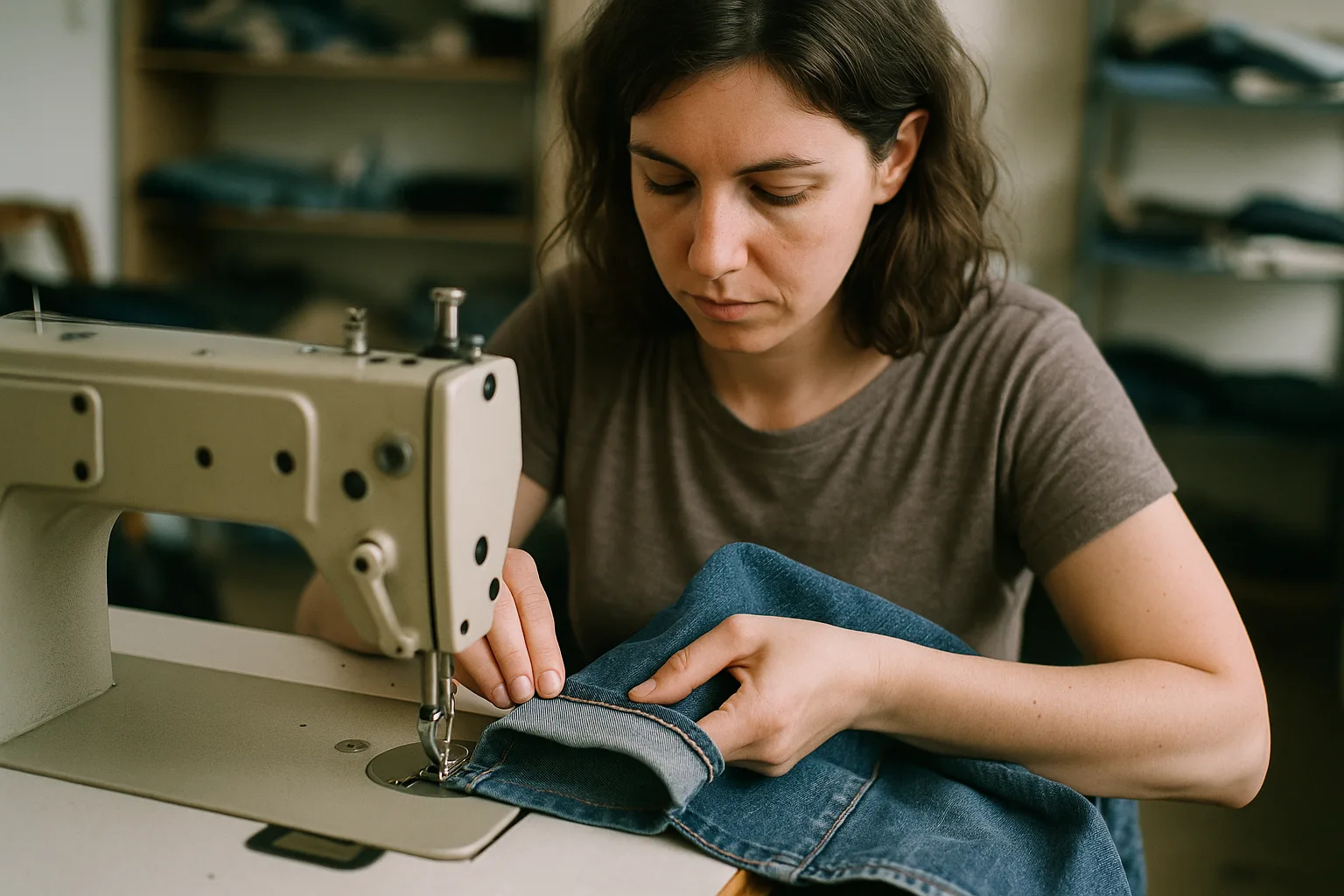
The casual-and-denim flow into the Roseville counter looks materially different from the formalwear queue, because the household relationship with the garment is different — denim is replaced rather than tailored on a generational cycle the way a suit is, and the alteration work runs lighter per-piece but heavier per-household. The first volume strand comes from chain-store denim purchases at the Roseville Galleria, the Sunrise Marketplace, and the Antelope-corridor box stores, where parents and working-week adults buy a pair, wear it once, and discover the inseam needs an inch or the waist sits half a size off. That work is the bench’s bread-and-butter — fifteen-minute pinning, three-day turnaround, original-hem preservation as the standard rather than the upcharge — and on a Saturday morning the counter is often working through six or eight of these in a row. The second strand runs the opposite direction in time: vintage Levi’s pulled out of closets after years of storage, premium denim from earlier decades that has acquired the kind of fade pattern only wear produces, and the inheriting or back-to-rotation alteration work that keeps a pair viable for a new wearer or for the original wearer after a fit change.
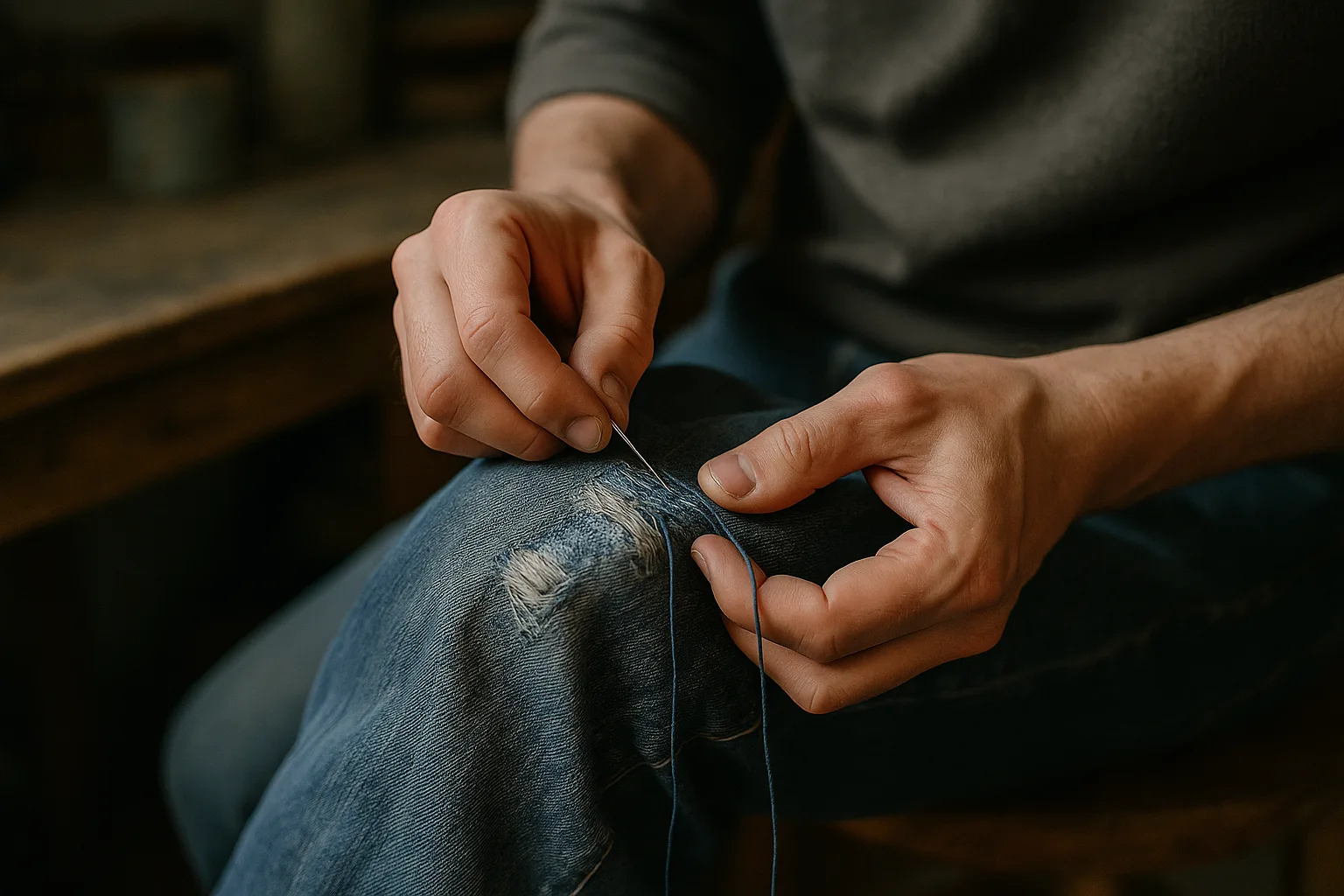
Original-hem preservation on premium denim is a craft skill rather than a checklist — the bench cuts the inseam from inside the leg, preserves the original chain-stitch hem, and reattaches it at the new length so the fade and wear pattern read continuous with the rest of the leg. That work is what brings the longer-running denim clientele to the Roseville Road bench from Antelope, Citrus Heights, and North Highlands together. The third strand, smaller in volume but recurring, is the workhorse repair queue: a favorite pair of jeans the wearer is not ready to retire, with a crotch blow-out from regular wear, back-pocket fraying from a wallet that has been in the same pocket for five years, or knee thinning the household wants reinforced before the failure cascades. The bench handles these as patches-from-inside or topside-overlay repairs depending on the wearer’s preference, and the honest assessment at intake will sometimes recommend retiring the pair when the surrounding fabric has lost enough integrity that the repair will not hold. The practical upshot across all three strands is the same: the Antelope-corridor household wants the alteration done close to home, fast, and at a price that does not exceed the original retail of the garment for most chain-store work — which is the math the bench builds against rather than against a downtown-Sacramento markup structure.
How It Works
Bring Your Denim
Walk in with your jeans, casual pants, or jackets. Wear the shoes you'll pair them with for accurate hemming.
Expert Fitting & Pinning
We'll assess the garment, discuss the look you want, pin for precision, and provide a clear quote on the spot.
Pick Up & Wear
Your perfectly altered denim is ready — original details preserved, fit transformed.
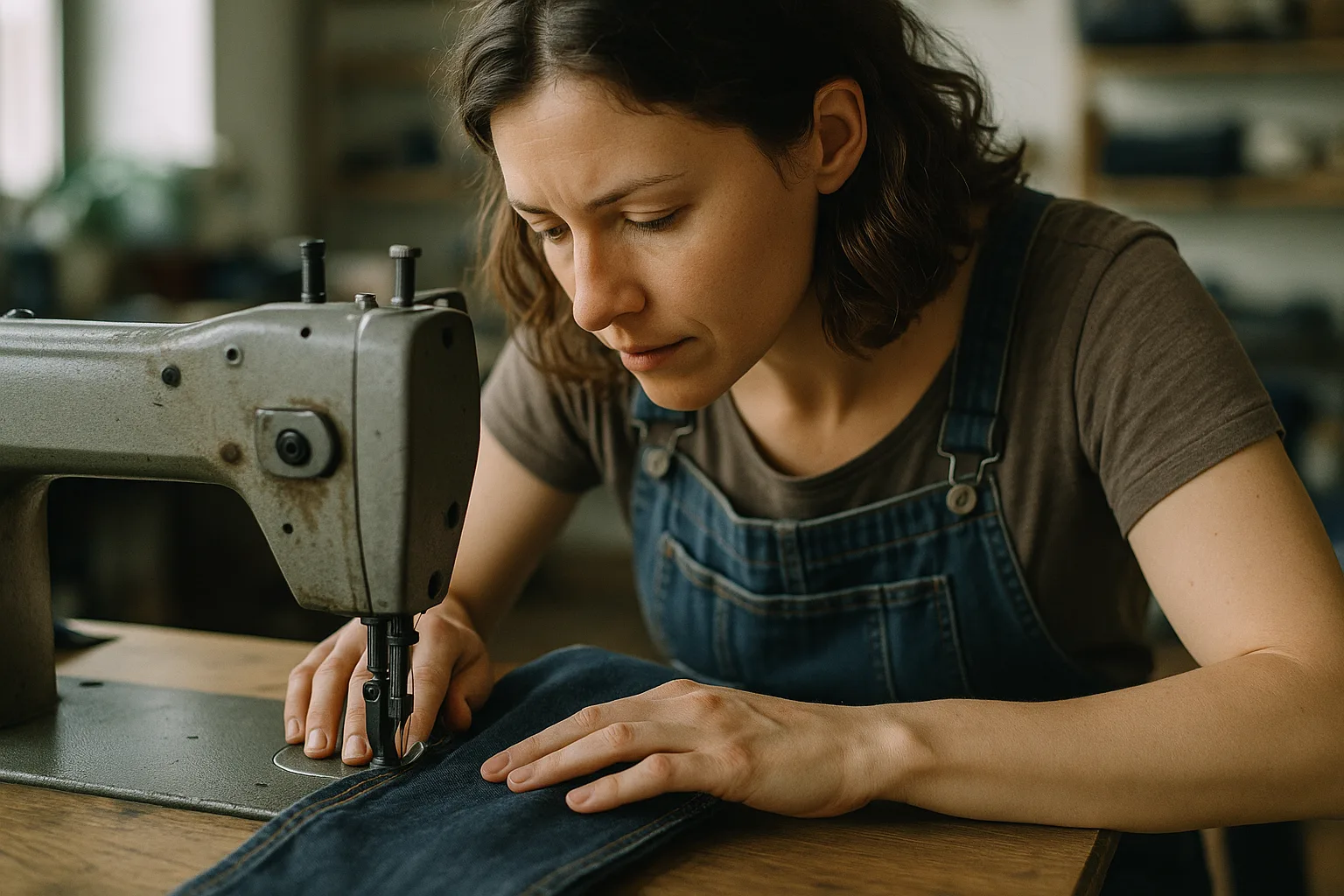
Denim and casual work folds into the standard walk-in pattern more cleanly than almost any other category at the Roseville counter — drop in during business hours, get pinned and quoted within fifteen minutes, and most jobs ship within four to five business days. For original-hem preservation work specifically, the bench sometimes runs longer (five to six business days) because the inseam-from-inside cut and the chain-stitch reattach are slower steps than a standard hem; we flag that at intake before the pickup window quotes. Saturday-morning drop-offs are the heaviest pattern for the denim queue, and Saturday pickups are realistic within the same week for almost all standard work. The seven-day re-fit window applies; if a denim hem reads too long or too short after a wear, bring the pair back the following week and the bench adjusts without recharging.
Starting Prices
Prices vary based on garment type and complexity. Contact us for a precise quote.
Jeans & Denim
| Service | Starting price |
|---|---|
| Hem (Original Hem Preserved) | $30 and up |
| Hem (Standard) | $25 and up |
| Taper Legs | $45 and up |
| Waist In / Out | $55 and up |
| Zipper Replacement | $35 and up |
Casual Wear
| Service | Starting price |
|---|---|
| Pants Hem | $25 and up |
| Jacket Sleeve Shortening | $45 and up |
| Shirt / Blouse Taper | $35 and up |
| Hoodie / Sweatshirt Hem | $35 and up |
Why Antelope chooses us
Original Hem Experts
We preserve the factory distressed edge on your jeans — the alteration is virtually invisible.
All Denim Weights
From lightweight stretch jeans to heavyweight selvedge — we have the right equipment for every fabric.
Fast Turnaround
Most denim alterations are done within 3–5 days. Rush options available for 48-hour delivery.
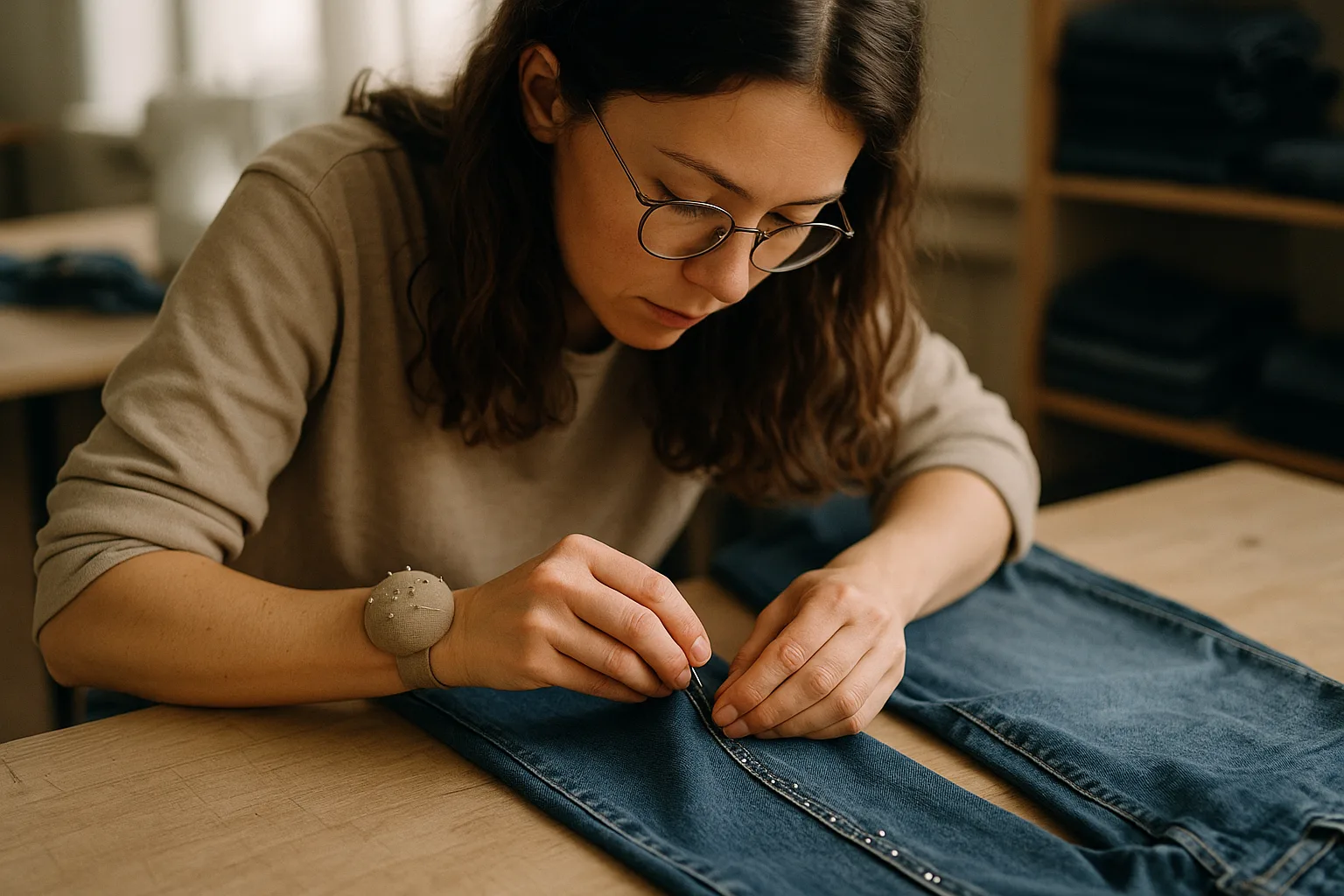
The honest case for booking denim alterations at the Roseville bench rather than at a Roseville Galleria or Sunrise Marketplace counter rests on two specific differentials that the household feels in the finished pair, not on a general claim of higher quality. The first is original-hem preservation as the standard rather than the upgrade — the bench treats chain-stitch hem preservation as the default approach on premium denim, where most chain-attached counters either do not offer it at all or charge it as an upcharge over the basic cut-and-double-stitch method that loses the original wear pattern.
On a pair of premium denim the wearer has been breaking in for two years, the preserved chain-stitch is the difference between a hem that reads continuous with the rest of the leg and one that reads like a salesfloor return. The second is master-tailor consistency: the same person who pins your hem at the fitting station sews it at the bench, which on tapered work — where the leg shape decision needs the eye of the person who saw the wearer stand in the mirror — produces a result the chain-counter handoff between fitter and remote sewing line struggles to match. By extension, the seven-day re-fit guarantee covers any denim job whose hem reads wrong after a real wear, and on tapered legs particularly we want the pair back the following week if the shape is not sitting right.
Frequently Asked Questions
Other alteration services in Antelope
Leather Alterations in Antelope
From $75 — Specialized equipment; 12+ yrs on luxury materials.
48-Hour Hem in Antelope
From $35 — Drop off by 4pm, ready in 48 hrs — guaranteed.
Custom Tailoring in Antelope
From $200 — Suits, shirts, dresses built to your measurements.
Bundle Alterations in Antelope
From $180 — Bring 3+ garments and save 10–20% on the total.
Bridal Alterations in Antelope
From $75 — Bustle, hem, bodice; 2–3 fittings; book 6–8 wks out.
Mobile Tailoring in Antelope
From $35 — We come to you; same studio quality, no drop-off.
Alterations in Antelope
From $25 — Hemming, taking in, resizing — 3–5 day turnaround.
Denim Tailoring in nearby cities
Denim Tailoring in Citrus Heights
~3 mi from our Roseville studio.
Denim Tailoring in North Highlands
~7 mi from our Roseville studio.
Denim Tailoring in Rio Linda
~11 mi from our Roseville studio.
Denim Tailoring in Roseville
~0 mi from our Roseville studio.
Denim Tailoring in Sacramento
~16 mi from our Roseville studio.
Denim & Casual Alterations in Antelope
Denim Alterations in Antelope That Keep Your Jeans Looking Like Jeans
Denim behaves like nothing else that comes across my table. It fades where you bend, stiffens where it doesn't, and carries the marks of however long you've owned it. That history is most of the reason a good pair is worth keeping, and it's also why a sloppy alteration shows up so badly on jeans. A leg that's been chopped and sewn with the wrong thread catches your eye from clear across the room. The same job, handled with some care, you'd never notice. Denim and casual wear is the work I handle most days at the studio, and the whole point of it is to make the change disappear. You should be able to pull on the finished pair and forget I ever touched it.
Most of what comes in is simple to describe and fussy to pull off. Jeans that drag too long. Jeans that fit the waist but balloon through the leg. Jeans that gap at the back the second you sit down. And the slow failures that come from wearing the same favorite pair four times a week. None of it takes a designer's eye. What it takes is somebody who has hemmed enough denim to know how the cloth moves under the needle and where it will fight you on a thick seam.